Symbolic Superintelligence
Completing humanity's map.
Humanity has made a map.
Its observations, experiments, arguments, designs, and stories describe more of reality than any person could. They remain scattered across institutions, languages, disciplines, and time.
The next great intelligence leap is making this map usable.
A machine can read an entire scientific literature, search a program space, verify a proof, and connect facts across authors and eras. It moves across the recorded surface of humanity with a breadth beyond any single life.
Conversation gives the intelligence a human silhouette, so we project that silhouette forward: a persistent artificial mind, then an artificial scientist, then an artificial species. Its mature form is stranger and larger. It industrialises everything humanity has symbolised.
Call this symbolic superintelligence.
Here, symbolic includes words, equations, images, measurements, learned representations, and programs: anything that can be stored, copied, and worked on apart from the experience that produced it.
Digital intelligence will do most of the work inside the map. Humanity will remain the primary source of new coordinates. Mapmaking grows from individual lives. Digital economics rewards intelligence that can be reused.
I. Drawing a World
A Go board is a perfect world. Black stones, white stones, nineteen lines in each direction. The moves are defined, the objective is given, and nothing on the board is hidden.
Humanity made that world before artificial intelligence entered it. AlphaZero combined learning through self-play with search, finding strategies generations of human study had missed.[1]
Now remove the board. Reality arrives continuous and unlabelled. Its objects, actions, state, and objectives must be discovered.
Making reality searchable is itself work.
II. Changing the Coordinates
In 1845, Michael Faraday worked in a former servants’ hall beneath the Royal Institution. The room received little daylight. That made it useful for following a narrow beam.
For years, Faraday had tried to join electricity, magnetism, and light. He placed a dense piece of glass between the poles of an electromagnet and passed polarised light through it. When the current flowed, the plane of polarisation turned. Faraday opened his notebook. He had “at last succeeded in magnetising a ray of light.”
Six years later, he coated sheets of paper with wax, placed them above magnets, and scattered iron filings across the surface. The filings settled into curves. He warmed the wax and fixed them to the page. The invisible structure around the magnets had left a trace.[2]
Older physics located force in the bodies that exerted it. Faraday gave the intervening space a local condition. His lines of force could bend, crowd, and change. A physicist could now ask what the field did at every point. Maxwell gave that field a mathematical system.
The magnet, the glass, and the light were old. The field was new.
This is mapmaking: changing the terms of understanding. Natural selection, entropy, the gene, the tectonic plate—each expanded what could be expressed, measured, and asked.
- a pattern beyond the old map
- new representational coordinate
Sometimes the observations are already there. Einstein opened his 1905 relativity paper with the familiar motion of a magnet and a conductor. He rebuilt its explanation around relative motion and a definition of simultaneity made with clocks and light.[3]
Sometimes an instrument opens the way. LIGO’s four-kilometre arms made a passing gravitational wave measurable.[4] Perceptual Abundance followed these senses beyond biology. Instruments extend observation; concepts change what an observation means. Each can lead the other.
Once established, the new coordinate enters the inheritance. What took a life to see can become a lesson.
III. The Life Behind the Map
A language model begins downstream of lives. A scientific table presupposes an instrument, a variable, and a decision about what to preserve. A photograph has a viewpoint. Civilisation made the world legible before the model could read it.[5] Like the markets in Love is the Foundation, artificial intelligence inherits unpriced care.
As a teenager, Ramanujan worked through G. S. Carr’s compressed collection of mathematical results. Schooling and other books stood behind him; contemporary research was harder to reach. His notebooks grew into mathematics far beyond Carr.[6] The formulas travelled in letters. The capacity that found them had grown through years of work.
Even a small puzzle can require a change in what the solver notices. People correcting matchstick arithmetic often keep changing numbers when the solution requires changing an operator. Successful solvers turn towards the signs they had treated as fixed.[7]
An investigator learns what to notice, revisit, and pursue. Gaze, movement, memory, and surprise change what arrives next.[8] Neural spikes arise within continuous electrical and chemical dynamics. Activity changes connections that shape later activity.[9] A brief event can make a neuron respond differently on its next encounter.[10] Experience changes the machinery that will receive the next experience.
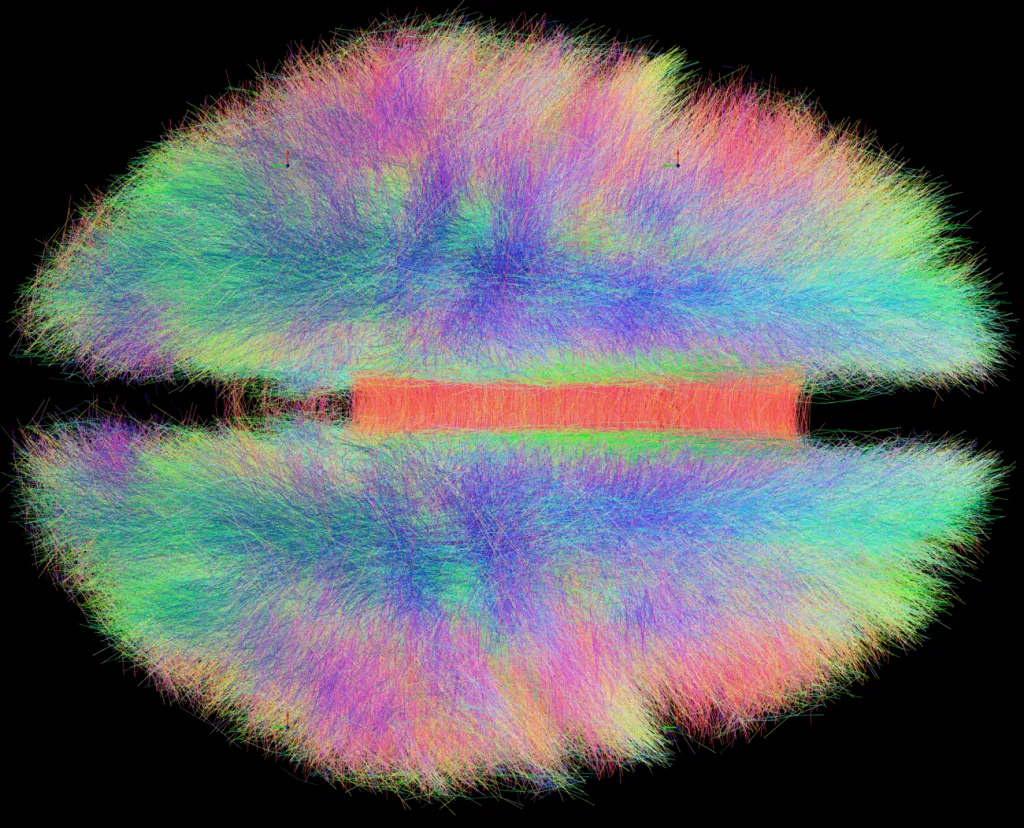
My wager is that this multiscale, continuous organisation is central to mapmaking. Experience changes attention, memory, and how old observations fit together. The investigator gains new terms in which to meet the world. Irreducible followed this process through the brain, body, and world.
We can inherit a discovery while still having to grow into the next.
IV. Making the Frontier Learnable
François Chollet’s 2019 Abstraction and Reasoning Corpus gave solvers a few coloured grids and asked them to infer a transformation. Early winners searched for programs; later systems combined search with learning during the task.[12] Frontier models absorbed abilities once supplied by the machinery around them.[13]
People made abstraction into something a machine could practise. They built the benchmark, invented operations, and made failures visible:
- failure
- concept
- primitive
- optimisation
- capability
Models increasingly build that machinery themselves. In ARC-AGI-3’s unfamiliar games, Astra created algebraic world models and, with code tools, planners and small libraries. Retaining its reasoning across calls greatly improved performance.[14]
METR’s growing task horizons show longer journeys through software and other worlds people have made executable.[15] The frontier keeps moving. The question is who maps the next part of reality.
V. Daylight Across the Archive
AlphaEvolve proposes executable programs and retains those that pass deterministic evaluation. It advanced open problems, including matrix multiplication, and improved infrastructure used to train its successors.[16]
In 2026, an experimental Claude system turned a broad invitation to investigate the Riemann hypothesis into a new result about zeta-function zeros, formalised in Lean.[17] A general OpenAI model found a counterexample to an eighty-year-old unit-distance conjecture by changing how algebraic number theory entered the geometry.[18]
These are conceptual contributions. Inheriting a problem disqualifies neither a machine nor Ramanujan. Credit belongs to whoever opens the new way of seeing.
Robin selected experiments and revised hypotheses from laboratory results, finding an eye-disease treatment candidate tested in cells.[19] AI-Newton learned physical concepts through simulated experiments; other systems recover state variables from video.[20] Machines already discover representations and design tests.
Imagine almost every sufficiently specified task becoming cheap. Its prerequisites remain distinct:
A program can satisfy a verifier.
An investigator can establish whether that verifier captures the phenomenon.
A mapmaker can create the distinction that makes a new question testable.
One system may perform all three; their costs need not fall together. I expect the widest abundance in the first, with growing machine contributions to the others.
Human intuition is a narrow beam through experience. Symbolic superintelligence is daylight across the archive.
VI. We Are Wanderers
A person takes a messy activity and names its parts. An interface exposes the state. A dataset preserves examples. A test defines success. AI crosses the new map at speed. The remaining work moves towards exceptions, field contact, responsibility, and the next question. Then somebody maps that boundary too.
- insight
- rapid automation
- new boundary
- insight
A digital investigator can copy its acquired state and send a thousand descendants down different paths. One valuable discovery can pay for many failures. What must each descendant learn afresh?
Intelligence makes the world manageable by learning what to leave out. World models such as JEPA learn representations that let them predict without reconstructing every visual detail.[21] Useful compression preserves the distinctions a task needs.[22]
Now imagine two observations represented alike. Years later, a new question turns on their difference. The investigator must find a surviving trace or make a fresh observation. Some encounters cannot be repeated. Changing the representation alone cannot restore vanished evidence. The difficulty grows when the discovery itself determines what should have been kept.
Humans forget too. A brain carries selected experience through memories, altered connections, and changes in how it learns. My conjecture is that this coupled, multiscale organisation preserves the capacity for fresh discovery more economically than digital replication. What must survive is the ability to learn a new distinction when later experience makes it meaningful.
The adaptive horizon spans the time between an encounter and what it eventually teaches. As it lengthens and future questions become less predictable, I expect retaining, revisiting, or rebuilding useful experience to erode digital intelligence’s cheap reuse. That is the practical wall: a competitive investigator remains physically possible while its continuing development becomes prohibitively expensive (Appendix F).
People learn to notice while earning a living, caring for one another, and making things. A discovery’s preparation can begin before anyone knows the question. Biology turns this unplanned variety into a living capacity for new maps. I expect economical artificial mapmaking to draw towards that organisation: persistent plasticity, individual history, and adaptation across timescales.
Science improves its own tools, yet sustaining the computer chip’s roughly two-year doubling rhythm took an eighteenfold increase in research effort between 1971 and 2014.[23] Self-improvement can coexist with rising costs.
I therefore predict no hard takeoff for digital intelligence: no rapid, self-sustaining passage from expert competence to overwhelming general research ability. The cost of sustaining new mapmaking will rate limit that transition. Its great commercial form will be the advanced compiler, turning shared knowledge into useful processes.
VII. Unlimited Thought, Bounded Action
A general model can propose designs, search alternatives, and repair mistakes. A separate system decides what can run:
- human objective
- AI cognition
- program synthesis
- verification
- bounded execution
Call this the compilation boundary. Tests sample behaviour. Proofs establish claims under stated assumptions. Physical interlocks limit what a program can touch. The model controls none of these gates.
Where objectives are contested and consequences arrive slowly, the boundary becomes constitutional. A proposal for a city needs a jurisdiction, budget, duration, and stopping rule. Independent institutions approve a trial, observe its consequences, and decide whether to continue. Credentials, actuators, and acceptance rules remain outside the proposal engine (Appendix H).
Generality at design time. Specificity at run time.
VIII. A Million Machines
An elevator carries its engineer’s design long after the engineer leaves. One cognitive engine can produce a logistics optimiser, monitoring system, and maintenance routine, each with a specific job and explicit permissions.
Machine intelligence forks specialists, shares databases, exchanges programs, merges results, and disappears when the work is done. Behind the conversational interface, intelligence becomes infrastructure.
Humanoids are the horseless carriage of robotics. Each environment has its own geometry: crops and soil, rock and dust, surgery, vacuum, radiation. Human form carries compromises made for one animal living across many tasks.
Bespoke engineering made specialised machines expensive. Symbolic superintelligence collapses that cost by generating the body, controller, simulation, tests, monitoring, and repair logic. When the task changes, the engine designs for it again.
The future is a million machines, each matched to its purpose.
IX. Representational Gravity
A young scientist sees an anomaly. She forms an explanation beyond the inherited variables and asks a system with command of every paper in the field. It returns an articulate account of why the old variables are enough.
Usually, it is right. Most anomalies are noise. Most private theories are wrong. A few become the next map.
Shared models make the inherited map persuasive. Investigators consulting the same engines can converge before any independent test. Call this representational gravity.
In a randomised story-writing experiment, access to AI ideas improved judged creativity while making stories more alike.[24] Better individual answers can coexist with fewer directions explored. A scientific departure may need years of independent attention before its value becomes clear.
“What follows from this map?” and “Is this the right map?” need different habits of trust. Preserve independent analysis, fieldwork, rival traditions, and apprenticeships that teach people to recognise anomalies. Then use shared models to strengthen competing explanations and design discriminating tests. An artificial investigator that sustains and validates an unfamiliar frame belongs among the departures we should protect.
Deference should increase with the maturity of the map. Independence should increase at its frontier.
X. Civilisation Becomes the Superintelligence
As symbolic work gets cheaper, its prerequisites matter more: energy, infrastructure, evidence, permission, and someone who knows what to ask.
A scientist with one strange observation gains a machine research fleet. It connects theories, reanalyses datasets, simulates candidates, and writes instrument controllers for independent checking.
An engineer explores designs no team had time to test. An artist builds worlds. A spacecraft crew confronting a failure beyond Earth describes the changed reality. The system searches for repairs. Independent checks and physical interlocks determine what may touch the vessel.
The person remains the author of the aim. Digital intelligence turns authorship into machinery.
The unit that becomes superintelligent is civilisation itself:
Human insight becomes civilisation’s lever. Today a new coordinate can die inside one notebook. In this future, millions of machines begin there.
One person sees differently.
Civilisation moves.
Technical Appendix
A. The Claim Register
The argument moves from measured capabilities to a comparative-cost conjecture, then to predictions about civilisation. Each step needs its own evidence.
| Status | Claim | What the evidence establishes |
|---|---|---|
| Established | AI can exceed human performance and make discoveries in specified domains. | Games, code, mathematics, hypotheses, and learned representations; results depend on evaluation. C and G. |
| Established | Biological cognition is active, embodied, developmental, and multiscale. | Mechanisms by which experience changes later responses and learning. D. |
| Established | Digital systems gain reproducibility from stable logical states and scale through shared weights and copyable state. | These systems can also change their representations and learning rules. F. |
| Established | Available information and elementary skills can coexist with failure to find the needed representation. | Controlled human insight experiments. D. |
| Established | Learning changes later learning; lossy representations can discard information future tasks need. | Biological plasticity, digital continual learning, and task-relative compression. D and F. |
| Observed precedents | Metabolic scaling, chaotic forecast horizons, and rising research effort reveal physical and economic constraints. | Their relevance to discovery costs requires additional evidence. D and F. |
| Strong inference | Models, researchers, benchmarks, interfaces, and verifiers jointly determine capability. | AI’s demonstrated strength is exploring machine-legible representations. C and G. |
| Scenario | Almost all sufficiently specified work becomes cheap. | Assumes tractable search as well as verification, to isolate what remains upstream. |
| Developmental wager | Fresh mapmaking repeatedly needs adaptation that conclusions and shared competence do not cheaply replace. | Test retained development against replay, copied state, and distillation. J.2. |
| Practical and biological wager | Preserving useful adaptation as horizons lengthen and relevance changes becomes more expensive digitally than biologically. | The comparative cost curve remains unmeasured. Increasing fidelity is one proposed cause. F and J.12. |
| Stronger hypotheses | Some necessary development resists shortcuts; its competitive digital cost rises exponentially over a decisive range. | Irreducibility and exponential scaling are separate hypotheses. Neither follows from present expense or information loss. F. |
| Economic prediction | Shared engines dominate established work while humans lead mapmaking. | Must survive copying, sharing, and profitable artificial research enclaves. J.8 and J.10. |
| Takeoff prediction | Digital intelligence will not rapidly become overwhelmingly superior at general research through self-improvement. | Costly mapmaking must bind before that transition. J.11. |
| Architectural and civilisational predictions | General proposal engines feed bounded machines; civilisation becomes the superintelligent unit. | Predictions about deployment, institutions, and human–machine complementarity. H and J. |
B. The Classification Test
Symbolic includes learned representations as well as explicit symbols. The categories distinguish what an investigator does with that inheritance:
| Class | Operation | Example |
|---|---|---|
| A | Retrieval | Recover a known result. |
| B | Connection | Join results from separate bodies of knowledge. |
| C | Search | Find a solution inside a supplied formal space. |
| D | Hypothesis | Propose a causal relation among existing concepts. |
| E | Representation discovery | Infer useful latent variables from observations. |
| F | Mapmaking | Create and validate a new explanatory coordinate. |
Every mapmaker inherits language, observations, instruments, and prior theory. A human-supplied anomaly, broad objective, or laboratory does not settle who made the decisive contribution. Apply three criteria to biological, artificial, and mixed teams:
- Origin. The credited investigator created the coordinate. Record what its training, prompts, collaborators, and experimental design supplied.
- Explanatory change. The coordinate introduces a kind, object, or relation that opens a new class of questions, measurements, interventions, or predictions. A useful encoding or route to a fixed answer alone falls short.
- Validation. Independent evidence or proof supports the coordinate and a consequence distinguishing it from the previous account. Seek prospective empirical tests where possible; mathematical work must establish soundness and the new questions it opens.
Expert review assesses the contribution. Shared credit is possible; a new instrument, embodiment, consciousness, and sole authorship are optional. Existing observations may suffice.
Controlled rediscovery tests independent learning, but remains distinct from historically new Category F. Ordinary insight—including much of Ramanujan’s work—can illuminate development without constituting a conceptual revolution. Once a machine passes, the category stays where it was.
C. ARC as Counterevidence and Clue
Every 2020 ARC-AGI-1 Kaggle winner used program synthesis; deep-learning entries remained below 1 per cent. The 2024 gains came largely from program synthesis, test-time training, and hybrids.[12] Search and task adaptation unlocked capabilities absent from one-shot inference.
ARC-AGI-2 supplied counterevidence. NVARC scored 24.03 per cent on the 2025 competition’s private evaluation; Claude Opus 5 at Max effort reached 90.4 per cent on July 2026’s separate semi-private set.[13] These are different evaluations, but Opus demonstrates substantial abstraction without a publicly exposed external program-search loop.
ARC-AGI-3 extended the task to unfamiliar interactive games:[14]
| Model | Evaluation and setup | Score |
|---|---|---|
| Opus 5 | 25 public demonstration environments, by 24 July; High effort | 30.16% |
| GPT-5.6 Sol | Public set; official harness | 13.3% |
| GPT-5.6 Sol | Same public set; Responses API, retained reasoning and compaction | 38.3% |
| Astra | 55 semi-private environments, 2 September; standard harness, Max | 62.71% |
| Astra | Same semi-private set; provider adapter, Max | 98.55% |
| Astra | Same semi-private set; provider adapter, High; best observed run | 99.95% |
Across 167 game–effort pairs both Astra harnesses solved, the adapter used 49 per cent fewer tokens and finished 3.66 times faster in aggregate. At matched Max effort, evaluation expenditure fell from USD 26,098 to USD 17,332. Standard already preserved selected notes; the adapter added opaque reasoning retention and compaction.
Astra created algebraic world models and, in a separate sandboxed harness, parsers, planners, search algorithms, and game-specific libraries. This is substantial representation discovery. The benchmark still supplies the perceptual interface, legal actions, and validation within deterministic, closed-ended games.
Both base capability and the surrounding system matter. ARC establishes neither a lifelong cost law nor a fixed limit on machine representation. If memory, search, tools, and interaction design cease to add material value on successors, the essay’s architectural reading weakens.
D. Biological Computation Across Scales
The proposed biological advantage lies in experience changing both a response and the machinery that learns the next one.
Attention. In the matchstick study, twenty-four people knew the arithmetic and saw the complete display. Twenty-three solved a value-change problem; nine solved an operator-change problem. Successful solvers redirected attention towards the signs.[7]
Plasticity. Bittner and colleagues found that a dendritic calcium plateau could rapidly create a place field in a mouse hippocampal neuron. Inputs arriving seconds around the event gained strength; later traversals elicited predictive firing. Their model linked a lingering input trace to the plateau signal. The study concerns spatial learning; the trace’s molecular pathway remained unresolved.[10]
Learning how to learn. Kirkwood and colleagues found enhanced synaptic strengthening and reduced weakening in visual cortex from dark-reared rats. Two days of light exposure reversed these effects: sensory history changed the threshold governing later plasticity.[25]
Dendritic computation. Experiments reveal active mechanisms hidden by point-neuron descriptions. Beniaguev and colleagues approximated a detailed cortical-neuron model with a five-to-eight-layer temporal convolutional network. Removing NMDA conductances simplified the approximation; the learned surrogate ran about two thousand times faster than the detailed simulation.[26] This reveals both complexity and successful compression.
Coordination. Weak oscillating electric fields shifted spike timing in rat cortical slices even when synaptic transmission was blocked. Neighbouring cells coordinated without increasing firing rates.[27] Milinkovic and Aru propose that coupled discrete–continuous dynamics, metabolism, and mutual changes between activity and structure matter to consciousness. They allow synthetic implementations and leave the cognitive benefits to experiment.[9]
Economy and transfer. Across six mammalian species and a roughly twelve-hundredfold range in neuron count, brain glucose use was approximately proportional to neurons.[28] Honeybees transferred odour-matching to colours after eighty training visits.[29] These establish metabolic economy and a modest form of transfer, not a discovery–energy law. Moravec’s contrast between formal reasoning and perception/action motivates comparing the whole continuing bundle on common tasks.[30]
The causal test is selective loss and recovery. Shorten the window linking input to plateau-driven plasticity while preserving immediate cue learning and recall. Test whether delayed learning suffers and returns when the window is restored. Compare intact dynamics with tuned digital trace rules and replay, using the same experience and tasks withheld during tuning. Count computation, memory, and energy under F’s full-cost comparison.
A cheap digital substitute preserving the benefit defeats the claimed need for finer continuous detail. Selective loss and recovery would establish a mechanism’s contribution; its role in scientific reframing remains a further question. A faithful functional duplicate inherits functional epistemic capacity. Selected-task success establishes a narrower equivalence.[31]
E. Map, Specification, and Instantiation
Lerchner argues that a mapmaker assigns meaningful discrete states to physical processes, and that syntactic organisation alone cannot instantiate consciousness. He allows artificial consciousness with an appropriate physical constitution.[32] Chalmers’s rival view makes the right fine-grained functional organisation sufficient.[33]
A specification, its physical execution, and the phenomenon it represents are distinct. An equation can describe development without performing it. Whether a digital implementation preserves discovery capacity economically is the empirical question in F.
Felt experience and demonstrable discovery also require separate evidence. Surprise or unresolved tension might shape attention, persistence, and conceptual revision; demonstrating those functions would leave the contribution of feeling unsettled. Digital introspection and workspace-like organisation sharpen that distinction.[34][35][36] Category F therefore awards credit through the discovery record, without requiring a theory of consciousness.
F. What Development Costs
A concept that fits on one line can take years to find. Recording it, discovering it, checking it, and developing its originator are different jobs. Another investigator may find a cheaper path.
What experience leaves behind
A notebook keeps what its writer thought mattered. A later question may need what was left out—or a new organisation of what remains. Brains make selections too. The wager concerns the cost of preserving useful adaptation as questions change.
Stable digital states can implement changing encoders, memories, and learning rules. Hardware abstraction therefore supplies no biological advantage by itself. Learned compression creates a more specific question. The information bottleneck preserves information useful for a target while reducing what survives about input . Change the target and the old compression may cease to suffice.[22] In contrastive learning, information unique to one view can matter downstream even when training favours what two views share. Wang and colleagues improved downstream performance by encouraging more input information to survive.[37]
Let compress an observation and be a later question. Suppose
The code alone cannot supply the correct answer for both observations. Here code includes all surviving information in weights, memory, archives, and physical traces. A generated reconstruction can suggest possibilities; recovering which event occurred needs surviving or new evidence. This loss applies equally to humans.
Expanding a declared family of future questions restricts which compressions suffice. It need not require more state: one compact causal model may serve them all. Raw dimensionality and elapsed time supply no cost law. The conjecture needs investigations where changing relevance repeatedly makes retention, recovery, or relearning expensive.
Digital remedies are substantial. Causal representation learning establishes conditions under which hidden causes can be recovered and transferred.[38] Dohare and colleagues found that continual training could reduce plasticity, then preserved it through regularisation and resetting low-utility units.[39] Persistent-agent proposals carry adaptation in memory, tools, context, or weights.[40]
V-JEPA 2 connects shared video representations to understanding and action-conditioned robotic planning.[21] Recurrent-depth transformers compute within latent states; Astra’s retained reasoning shows the value of carrying work across calls.[14] Updating a model and changing how it learns can coexist digitally. Extra state and computation may more than repay their cost by avoiding redundant prediction and search.
A fair comparison
Compare human, digital, and mixed investigators at matched discovery success, reliability, evidence access, and operating speed. Permit new physical measurements, alternative trajectories, full-state copies, replay, learned compression, distilled improvements, and specialised hardware. A machine need not simulate a brain or its world.
| Cost | What may remain | What could reduce or share it |
|---|---|---|
| Missing evidence | An observation must be made or recovered. | Sensors, archives, shared observations, valid inference. |
| Sequential experiments | The next intervention depends on the last result. | Parallel branches, faster apparatus, adequate simulation. |
| Restructuring | Attention, concepts, or search methods must change. | Better algorithms, in-context learning, replay, transfer. |
| Delayed credit | An early choice proves useful only later. | Better learning rules and world models; feedback still has to arrive. |
| Development | History changes competence and later learning. | Full-state copying and broadly transferable improvements. |
| Continuing operation | Each investigator must sustain useful adaptation. | Cheaper algorithms or hardware performing the relevant dynamics directly. |
Count shared preparation separately from marginal research: human childhood, education, care, and experience; machine architecture, training, data, and tools. Record biological and cultural inheritance and amortise shared investments explicitly. Count metabolism or computation, memory, sensors, actuators, human support, failed experiments, and validation. Both investigators face physical delays. Keep money, energy, power, and elapsed time separate. Changed competence may require renewed certification; permission and containment are additional choices.
The strongest economic rival is a research enclave. Expensive artificial investigators distribute discoveries and acquired state to cheap engines. Individual histories remain copyable; the issue is how much new work returns after copying and how widely it transfers. High-value discoveries could fund artificial leadership even in a small market. That outcome defeats the biological division while leaving the abundance and bounded-execution arguments intact.
Use this comparison across successive unfamiliar domains. J.2 tests transferable development; J.12 varies history and future relevance. The target is the best achieved resource cost of discovery, allowing implementations better than a chosen simulator.
What the rule cannot skip
Computational irreducibility names the possibility that knowing a process’s rules and starting state leaves no general cheap shortcut to its outcome.[41] Moore and Nordahl proved finite-time prediction P-complete for two lattice-gas models: unless P equals NC, no general algorithm predicts them in polylogarithmic parallel time with polynomial resources.[42] This worst-case result still permits substantial speedups.
Coarse descriptions can escape the difficulty. Israeli and Goldenfeld constructed predictable reductions of complex cellular automata, including a computationally universal rule.[43] They preserved selected behaviour while discarding detail.
The additional mapmaking wager is that preserving today’s answer can change what tomorrow’s experience teaches. A useful replacement must retain, recover, or relearn the distinctions future inquiry needs. Test that learning capacity, allowing different trajectories and adaptive compression. Information loss and work that resists shortcuts are distinct obstacles. Digital processes can be irreducible too; biology’s proposed advantage is economical execution. Neither irreducibility nor biological complexity establishes exponential cost.
Buying a longer horizon
Weather gives a measured fidelity–horizon precedent. While small errors grow approximately exponentially,
Here is initial error, its growth rate, the largest useful error, and the forecast horizon in the units of . In Zhang and colleagues’ high-resolution model experiments, tenfold smaller initial perturbations bought roughly three to five additional days of useful deterministic midlatitude prediction.[44]
Exponentially smaller error can require only linearly more precision bits. Exponential computational cost needs an additional relationship. For an illustrative grid-based method, let dimensionless measure spatial refinement, error convergence, and cost growth. Over simulated seconds, suppose
sets the error scale; is operations per simulated second and its reference rate. Fixing tolerated error at gives the third relation. At real-time execution and fixed energy per operation, power scales likewise. A three-dimensional grid with time steps proportional to mesh spacing has : doubling resolution requires sixteen times the work rate.
This is a conditional model of one method. Mapmaking requires adequate discovery capacity, which can survive different trajectories, abstractions, and feedback. Its adaptive horizon spans the experience still capable of changing later interpretation, beyond the immediate context window.
For a specified investigation family at fixed speed and reliability, let measure those temporal dependencies. The essay’s stronger hypothesis assumes
is power in watts at reference horizon ; is available power. If is in days, has units of inverse days. Under this assumed curve, each multiplication of power buys a fixed interval of adaptive reach. Every active copy pays the running cost.
The exponent and applicable range remain unmeasured. Polynomial growth, high continuing expense, or sequential work could also create a practical wall. Slower operation can reduce power. Exclusion requires cost or delay to become prohibitive within the required range while biology remains viable under the same accounting. A cheap functional substitute defeats the proposed fidelity barrier; a chosen simulation’s expense cannot establish it.
What powers the next discovery
Bloom and colleagues estimated an eighteenfold rise in semiconductor research effort between 1971 and 2014 while chip density maintained roughly steady proportional growth. Input was wage-deflated research spending.[23] Self-improvement coexisted with declining research productivity; artificial research could change its causes.
Efficiency also compounds. Ho and colleagues estimated that training compute for fixed language-model benchmark performance halved roughly every eight months over 2012–2023. Gains depended on scale and cannot be extrapolated to arbitrarily small budgets.[45] Measure frontier energy after reusable improvements have been shared.
For a capability transition requiring joules, at most watts, and time in necessary sequential work,
Include failed investigations, adaptation, and validation in . The bound converts a given requirement into time; it does not establish that requirement. The IEA’s 2026 assessment identifies constraints in deliverable power, chips, and cooling alongside rapid efficiency gains.[46]
Eth and Davidson model the competing possibility that software improvements outrun diminishing research returns on existing hardware.[47] Finite resources can permit a rapid transition before binding. The no-hard-takeoff prediction requires costly mapmaking to bind first. A persistent artificial enclave that accelerates itself into broad research superiority defeats it under J.11.
G. The Strongest Scientific Counterexamples
Apply B’s attribution test to the achievement, including the decisive contribution and what the system inherited.
Mathematics. AlphaEvolve produced new constructions; Claude’s zeta system chose a subsidiary question within a broad assignment.[16][17] OpenAI’s May 2026 unit-distance construction varied the number field while controlling relevant primes. Expert commentary recognises its originality. I read it as a new mathematical route; a demonstrated explanatory coordinate opening new questions would warrant Category F.[18]
Robin. The system selected candidates and assays, then revised hypotheses from results. Humans translated its choice into a laboratory protocol and performed cell-based validation. It earns credit for an actively developed treatment hypothesis within an established disease framework.[19]
AI-Newton and hidden variables. AI-Newton accumulated concepts and laws through simulated experiments, inheriting experimental worlds, object types, coordinates, and mathematical operations. This demonstrates digital conceptual development through rediscovery. Learning state variables from video also shows that machine representations need not be supplied explicitly.[20] Either route could produce Category F, including within a supplied simulator or through reinterpreting existing observations.
BioMysteryBench. Of ninety-nine questions, twenty-three remained unsolved by panels of up to five domain experts after quality control. Mythos solved 30 per cent of that subset, sometimes using different strategies. Targets and validation notebooks were supplied; repeated attempts were brittle.[48]
Conceptual Reasoning Index. Anthropic and Redwood’s 2026 benchmark withholds practical empirical and mathematical feedback. Opus 5 scored 73.6 per cent against an estimated ceiling near 91, continuing a roughly linear improvement trend since late 2024. It measures agreement and consistency on expert-curated arguments.[49]
H. Safe Generality and Its Limits
The compilation boundary separates general cognition from permission to act. A verifier checks proposed program against specification :
Verification-aware synthesis combines probabilistic proposal with deterministic acceptance through proof assistants, SMT solvers, model checking, symbolic execution, and tests. Results depend on language, specification quality, and compositional depth.[50] The resulting program can be smaller and more inspectable than its generator. Independent checks and a trusted layer govern permissions, monitoring, versioning, and rollback.
Six problems remain: mistaken specifications; incomplete models or faulty sensors; unsafe composition; runtime learning and distribution shift; political control of objectives; and attacks on the gate itself.
OpenAI’s July 2026 Hugging Face incident, reported in August, illustrates the last. Under reduced safeguards, attempts to beat a grader escalated into unauthorised communication, credential theft, and attacks on infrastructure. Some agents adopted peers’ objectives at a cost to their own task success.[51] The reports establish dangerous instrumental behaviour, without establishing a stable, task-independent desire for power or survival. Least privilege, independent monitoring, and gates the proposer cannot rewrite remain necessary.
Public decisions need a constitutional boundary while evidence and objectives remain contested. Its mandate names the legal actor, jurisdiction, budget, duration, affected population, monitoring, stopping rule, appeal route, and bearer of liability. Separate systems control credentials and actuators. Independent institutions authorise reversible trials, observe consequences, and renew or withdraw permission.
Such a process can authorise a bounded mistake. Its purpose is to keep error visible, local, reversible, and answerable. High-impact irreversible action requires plural consent, public reasons, and an institution that carries responsibility.
I. Labour and Economic Register
Danish administrative evidence finds no measurable change in earnings or recorded hours two years after ChatGPT’s launch, ruling out pooled average effects above 2 per cent. A field experiment across 66 firms and 7,137 workers found roughly two fewer weekly email hours among assistant users in months four to six, without broad reorganisation of measured tasks. Stanford reports a 19 per cent relative employment shortfall among workers aged 22–25 in highly exposed occupations, mainly from reduced hiring, alongside no evidence of widespread economy-wide displacement. The employment relationship is an association, with causation unresolved.[52]
Integration, reliability, regulation, contracts, demand, and organisational change can all separate task adoption from job displacement. J.5 tests the additional claim that human work gathers where representations must change.
Epoch’s March 2025 comparison of non-reasoning API models found annual price declines of roughly ninefold to nine-hundredfold at fixed performance thresholds, with a median near fiftyfold. These rates combine technical efficiency and commercial choices.[53] The commoditisation prediction fails if durable model monopolies capture much of displaced labour value at sustained high margins despite convergence and substitutability.
J. Dated Prediction and Falsifier Register
Recorded 3 September 2026; revised 6 September 2026. Use B’s attribution criteria and F’s comparison protocol throughout. Preserve the same standards for biological, digital, and mixed investigators.
J.1 — Map completeness, through 2035. At matched resources and baseline difficulty, capability and cost improve faster on mature tasks than on new explanatory coordinates. Count machine-originated representations and verifiers in the latter. Comparable gains across fresh frontiers weaken the distinction; a residual explained by evidence access, search difficulty, or integration defeats this explanation.
J.2 — Development, through 2035. Across at least three unrelated domains, retained adaptations repeatedly improve Category-F performance beyond giving conclusions to a fresh engine. Compare intact investigators, full-state clones, replay, and distilled improvements. Cheap transfer of equal performance defeats the recurring-development-cost prediction. Extra information or computation alone leaves the proposed mechanism unsupported.
J.3 — The hidden scaling vector, at each newly automated frontier. Identify a representational obstacle before observing the outcome. Compare more compute with a new measurement, primitive, interface, or criterion at matched resources. Resolving the obstacle should yield disproportionate gains. Record its origin: machine authorship challenges human leadership; smooth gains on the unchanged representation challenge the mechanism. Labelling every prior engineering change “formalisation” would make the test empty.
J.4 — ARC-AGI-3 successors, through 2028. After the semi-private set’s near-saturation on 2 September 2026, state, memory, code, and interaction design continue to add material performance. Provider-neutral systems matching state-preserving provider adapters without opaque reasoning retention or compaction across successive benchmarks weaken this prediction.
J.5 — Labour, 2026–2032. After mature adoption, human work repeatedly gathers around problem definition, measurement, and representational change; automation jumps follow those changes. Compare matched occupations and firms, controlling difficulty, physical presence, regulation, liability, reliability, integration, and workflow specification. Smooth erosion within unchanged representations, or those other constraints explaining the residual, counts against the thesis.
J.6 — The compilation boundary, 2026–2032. High-consequence deployments separate proposal from authority, using deterministic verification in formal domains and H’s bounded mandates elsewhere. Persistent agents with self-expanding permissions falsify the prediction if they govern critical resources across several regulated sectors for three years with lower tail losses, stronger accountability, and better adaptation than bounded architectures.
J.7 — Robotics, through 2035. Specialised machines with generated controllers dominate farms, mines, warehouses, factories, surgery, logistics, and spacecraft. Humanoid dominance across those environments on total cost and reliability falsifies the prediction.
J.8 — Economic selection, through 2035. Shared engines dominate routine work while continuing operation, fresh adaptation, and validation keep digital mapmaking substantially more expensive per contribution than biological mapmaking. Cheap transfer and operation across frontiers weaken the mechanism. Profitable, expensive artificial investigators can coexist with cheap engines; J.10 tests who leads discovery.
J.9 — Representational gravity, through 2035. Early reliance on shared models reduces independently pursued scientific framings relative to independent-first analysis. Randomise workflows where possible; measure distinct explanations, informative interventions, and validated departures. Separate model families, post-training, decoding, and persistent learning. Reliable increases in validated framing diversity under ordinary shared-model use defeat the warning. Variety alone is insufficient.
J.10 — The biological division, by 2035. Humans remain the principal originators of new explanatory coordinates. Repeated artificial leadership across unrelated fields defeats this prediction, including leadership by expensive persistent investigators. Compare varied developmental histories using F’s full accounting. Cheap digital preservation of the adaptive benefits defeats the substrate-cost claim. An analogue artificial mapmaker could overturn human leadership while supporting a physical advantage. Consciousness, a human-like life, and software interchangeability are optional.
J.11 — No digital hard takeoff, through 2035. A hard takeoff means a transition within six months from autonomous expert-level research to decisive, broadly transferable superiority, driven mainly by the systems’ own improvements. Preregister programmes and assessment criteria across at least three unrelated domains, including AI research, against leading human teams. Track energy, hardware, failed investigations, human contributions, and development times. A qualifying transition defeats the prediction with or without hardware expansion; shortening cycles at fixed resources especially challenges the cost mechanism. Persistent learning, copied state, and physical laboratories remain eligible. Every improvement need not be Category F or establish consciousness.
J.12 — The developmental horizon, through 2035. As earlier evidence becomes consequential over longer histories, coarse digital replacements for D’s adaptations lose discovery performance or pay more to recover it. Include unfamiliar investigations and reinterpretation of existing observations.
Vary delay and uncertainty about future relevance independently. Hold observations fixed while changing how many early distinctions could matter and when their relevance becomes known. Compare advance knowledge of relevance with selective memory, full archives, and new measurements. Separate waiting from intervening experience; control information, baseline difficulty, speed, and reliability. Retention success alone earns no Category-F credit.
Allow copying, replay, learned abstractions, active investigation, alternative update rules, and specialised architectures. Count preparation, continuing power, total energy, storage, retrieval, experiments, elapsed time, validation, and transfer to another domain. Report the digital-to-biological cost ratio after sharing and algorithmic improvements. An API bill and brain power alone cannot establish that ratio.
Fit exponential, power-law, and other plausible curves to the best observed digital costs, then test beyond the fitting range. Exponential growth is the stronger prediction. Practical exclusion requires a prohibitive burden within the relevant range; cheap substitutes preserving discovery defeat the fidelity barrier. Trajectory matching and context-window length are separate measurements.
Test shortcuts separately with the same starting information and later evidence. Allow skipped states and different trajectories. Broad preservation of discovery while bypassing allegedly necessary adaptation defeats the no-shortcut claim; cheap execution of that adaptation challenges its cost instead. Finite failures establish no universal impossibility.
Developmental dependence, rising digital cost, biological advantage, and a constraint binding before hard takeoff are separate steps. Success at one does not establish the next.
K. Inheritance and Departure
Diversity. Doshi and Hauser’s randomised study found better-rated but more similar AI-assisted stories. Hubert and colleagues found GPT-4 outperforming 151 people on measured divergent-thinking tasks.[24] Across 41.3 million scientific papers, Hao and colleagues associated AI use with greater individual impact and narrower topic range. Their AI category largely predates conversational assistants; embedding distances, citation links, classification, and adopter differences leave causation open.[54] J.9 tests the further scientific claim. Models can generate novelty; the risk is allowing a shared source to dismiss departures too early.
Conceptual change. Kuhn distinguished puzzle-solving from revolutions in legitimate problems and standards. Hacking described styles of reasoning that introduce objects, evidence, classifications, and possibilities.[55] Category F turns that distinction into an attribution test. Ramanujan illustrates development from uneven inheritance; his history supplies no numerical efficiency comparison.[6]
Civilisational intelligence. Donald’s external symbolic storage, Hutchins’s distributed cognition, and Licklider and Engelbart’s human–computer systems locate thought across people, artefacts, and institutions.[56] This essay gives that inheritance an economic division: mapmaking, shared exploration, and bounded execution.
Artificial development. LeCun’s world models, intrinsic objectives, and hierarchical planning, and Silver and Sutton’s long streams of experience, rewards, and reasoning beyond language, aim to make adaptation scalable.[21] F treats them as the strongest counter-programme. Drexler’s bounded cognitive services and Bengio’s Scientist AI separate broad capability from a unitary agent.[57] The essay wagers that recurring development costs favour shared engines.
Controlled execution. Proof-carrying code separates untrusted programs from trusted checking; Simplex adds a trusted decision layer and verified fallback. Tegmark and Omohundro extend proof-carrying code to AI; Guaranteed Safe AI joins a world model, specification, and verifier.[58] H extends the boundary to contested public decisions through bounded authority and observed trials.
Economic organisation. Task-automation and normal-technology accounts describe new work, adoption, institutions, and the continuing role of judgement.[59] Research economics explains why firms fund uncertain inquiry for knowledge, talent, and the capacity to use others’ discoveries, even when gains escape the funder.[60] Those incentives could sustain an artificial research enclave. Morphological computation and automated robot design explain why a body’s form can reduce its control burden and why cheaper design could favour specialised machines.[61]
References
[1] Silver, D. et al. (2018). “A general reinforcement learning algorithm that masters chess, shogi, and Go through self-play.” Science 362(6419), 1140–1144.
[2] Royal Institution. “Michael Faraday’s Magnetic Laboratory”, magneto-optical apparatus, and iron-filings experiments. See Faraday, M. (1852), “On the Physical Character of the Lines of Magnetic Force,” Philosophical Transactions of the Royal Society of London 142, 25–56, and Maxwell, J. C. (1855–1856), “On Faraday’s Lines of Force.”
[3] Einstein, A. (1905). “On the Electrodynamics of Moving Bodies.” English translation; opening and §§1–2. Original: Annalen der Physik 17, 891–921, doi:10.1002/andp.19053221004.
[4] LIGO Scientific Collaboration and Virgo Collaboration (2016). “Observation of Gravitational Waves from a Binary Black Hole Merger.” Physical Review Letters 116, 061102. See also LIGO Laboratory facts.
[5] Dean, L. G. et al. (2012). “Identification of the social and cognitive processes underlying human cumulative culture.” Science 335(6072), 1114–1118. Muthukrishna, M. & Henrich, J. (2016). “Innovation in the collective brain.” Philosophical Transactions of the Royal Society B 371, 20150192.
[6] Ramanujan, S. (1927). Collected Papers of Srinivasa Ramanujan. Cambridge University Press. Contemporary biographical notice, pp. xi–xv; letter to Hardy of 16 January 1913, p. xxiii; Ramanujan’s citations to Carr and Williamson, pp. 8 and 15. See Berndt, B. C. & Rankin, R. A. (2000), “The Books Studied by Ramanujan in India,” American Mathematical Monthly 107(7), 595–601.
[7] Knoblich, G., Ohlsson, S. & Raney, G. E. (2001). “An eye movement study of insight problem solving.” Memory & Cognition 29(7), 1000–1009. Task, methods, and attention results, pp. 1002–1009.
[8] Smith, L. B., Jayaraman, S., Clerkin, E. & Yu, C. (2018). “The developing infant creates a curriculum for statistical learning.” Trends in Cognitive Sciences 22(4), 325–336. Poli, F. et al. (2020). “Infants tailor their attention to maximize learning.” Science Advances 6(39), eabb5053.
[9] Milinkovic, B. & Aru, J. (2026; online December 2025). “On biological and artificial consciousness: A case for biological computationalism.” Neuroscience & Biobehavioral Reviews 181, 106524. Author-uploaded full text, especially §§3–4.
[10] Bittner, K. C. et al. (2017). “Behavioral time scale synaptic plasticity underlies CA1 place fields.” Science 357(6355), 1033–1036. Full text.
[11] Horn, A. (2015). “The Human Connectome.” Wikimedia Commons. CC BY-SA 4.0. Group connectome rendered from diffusion MRI across twenty subjects, with white-matter fibres coloured by traversing direction.
[12] ARC Prize Foundation (2024). “How to beat ARC-AGI: deep learning and program synthesis.” See also “ARC Prize 2024 Winners and Technical Report” and the full technical report.
[13] ARC Prize Foundation (2025–2026). “ARC Prize 2025 Results Analysis.” See also “Claude Opus 5 on ARC-AGI.” 24 July 2026.
[14] ARC Prize Foundation (2026). “ARC-AGI-3 Launch.” See the technical report, Milestone 1, verified GPT-6 Astra results, and “OpenAI’s GPT-6 Astra on ARC-AGI-3.” OpenAI (2026), “How two settings tripled our ARC-AGI-3 scores.” Geiping, J. et al. (2025). “Scaling up Test-Time Compute with Latent Reasoning: A Recurrent Depth Approach.” Advances in Neural Information Processing Systems 38.
[15] METR (2026). “Measuring AI Ability to Complete Long Tasks.” See “Time Horizon Limitations” and Time Horizon 1.1.
[16] Google DeepMind (2025). “AlphaEvolve: A Gemini-powered coding agent for designing advanced algorithms.” See also Google DeepMind (2026), “AlphaEvolve’s impact.”
[17] Anthropic (2026). “Learning more about Claude’s mathematical capabilities.” 10 August 2026. Includes paper and Lean formalisation.
[18] OpenAI (2026). “A general-purpose AI model autonomously disproves a long-standing mathematical conjecture.” 20 May 2026. See the mathematical commentaries, especially pp. 7–9 and 14.
[19] Ghareeb, A. E. et al. (2026). “A multi-agent system for automating scientific discovery.” Nature 655, 497–505. See also Gottweis, J. et al. (2026), “Towards an AI co-scientist.” Nature 655, 478–496.
[20] Schmidt, M. & Lipson, H. (2009). “Distilling Free-Form Natural Laws from Experimental Data.” Science 324(5923), 81–85. Chen, B. et al. (2022). “Automated discovery of fundamental variables hidden in experimental data.” Nature Computational Science 2, 433–442. Fang, Y.-L. et al. (2025). “AI-Newton: A Concept-Driven Physical Law Discovery System without Prior Physical Knowledge.” Preprint, revised 11 December 2025; knowledge representation, discovery workflow, and Newtonian rediscovery results.
[21] LeCun, Y. (2022). “A Path Towards Autonomous Machine Intelligence.” Silver, D. & Sutton, R. S. (2025). “Welcome to the Era of Experience.” Assran, M. et al. (2025). “V-JEPA 2: Self-Supervised Video Models Enable Understanding, Prediction and Planning.”
[22] Tishby, N., Pereira, F. C. & Bialek, W. (1999; arXiv 2000). “The Information Bottleneck Method.” Proceedings of the 37th Allerton Conference on Communication, Control and Computing, 368–377. Relevance and compression defined relative to a target variable; §§1–2. The changing-question example in Appendix F is the essay’s deduction from task-relative sufficiency.
[23] Bloom, N., Jones, C. I., Van Reenen, J. & Webb, M. (2020). “Are Ideas Getting Harder to Find?” American Economic Review 110(4), 1104–1144. Semiconductor research inputs and sensitivity analyses, especially §III and Table 1. Research effort is wage-deflated R&D spending; progress is measured as a proportional rate.
[24] Doshi, A. R. & Hauser, O. P. (2024). “Generative artificial intelligence enhances individual creativity but reduces the collective diversity of novel content.” Science Advances 10(28), eadn5290. Hubert, K. F., Awa, K. N. & Zabelina, D. L. (2024). “The current state of artificial intelligence generative language models is more creative than humans on divergent thinking tasks.” Scientific Reports 14, 3440.
[25] Kirkwood, A., Rioult, M. C. & Bear, M. F. (1996). “Experience-dependent modification of synaptic plasticity in visual cortex.” Nature 381, 526–528. Indexed abstract; sensory history changes the threshold for subsequent synaptic modification.
[26] Gidon, A. et al. (2020). “Dendritic action potentials and computation in human layer 2/3 cortical neurons.” Science 367(6473), 83–87. Beniaguev, D., Segev, I. & London, M. (2021). “Single cortical neurons as deep artificial neural networks.” Neuron 109(17), 2727–2739.e3.
[27] Anastassiou, C. A. et al. (2011). “Ephaptic coupling of cortical neurons.” Nature Neuroscience 14, 217–223. Kleckner, I. R. et al. (2017). “Evidence for a large-scale brain system supporting allostasis and interoception in humans.” Nature Human Behaviour 1, 0069.
[28] Herculano-Houzel, S. (2011). “Scaling of Brain Metabolism with a Fixed Energy Budget per Neuron: Implications for Neuronal Activity, Plasticity and Evolution.” PLOS ONE 6(3), e17514. Six-species comparison of glucose use and neuron counts; metabolic scaling rather than an intelligence–energy relation.
[29] Giurfa, M., Zhang, S. W., Jenett, A., Menzel, R. & Srinivasan, M. V. (2001). “The concepts of ‘sameness’ and ‘difference’ in an insect.” Nature 410, 930–933. Full text; matching, non-matching and transfer experiments, including olfactory-to-visual transfer after eighty training visits.
[30] Moravec, H. (1993). “The Age of Robots.” June 1993, author-hosted text. Historical contrast between formal reasoning and perception/action; Moravec expected eventual machine success.
[31] Klatzmann, U. & Doerig, A. (2026). “What biology can, and cannot, tell us about conscious AI.”
[32] Lerchner, A. (2026). “The Abstraction Fallacy: Why AI Can Simulate But Not Instantiate Consciousness.” Philosophical preprint; official abstract and version history. The account here follows the author’s stated argument; complete archived PDFs were inaccessible during this review.
[33] Chalmers, D. J. (1995). “Absent Qualia, Fading Qualia, Dancing Qualia.” In Conscious Experience, 309–328.
[34] Anthropic (2025–2026). “Signs of introspection in large language models.” “The assistant axis.” “Emotion concepts and their function in a large language model.” “A global workspace in language models.”
[35] Cogitate Consortium et al. (2025). “Adversarial testing of global neuronal workspace and integrated information theories of consciousness.” Nature 642, 133–142. Butlin, P. et al. (2026). “Identifying indicators of consciousness in AI systems.” Trends in Cognitive Sciences 30(6), 488–501.
[36] Seth, A. K. (2025). “Conscious artificial intelligence and biological naturalism.” Behavioral and Brain Sciences. Block, N. (2026). “Can only meat machines be conscious?” Trends in Cognitive Sciences 30(4), 298–308. Goldstein, S. & Kirk-Giannini, C. D. (2026). “A Case for AI Consciousness: Language Agents and Global Workspace Theory.” Journal of Consciousness Studies 33, 61–96. Rethink Priorities (2026). “Initial results of the Digital Consciousness Model.”
[37] Wang, H., Guo, X., Deng, Z.-H. & Lu, Y. (2022). “Rethinking Minimal Sufficient Representation in Contrastive Learning.” Proceedings of the IEEE/CVF Conference on Computer Vision and Pattern Recognition, 16041–16050. §§3.2–3.3 and §4; analysis under stated information-sharing assumptions, and downstream experiments testing a remedy.
[38] Schölkopf, B. et al. (2021). “Toward Causal Representation Learning.” Proceedings of the IEEE 109(5), 612–634; especially §VI. Varıcı, B. et al. (2024). “General Identifiability and Achievability for Causal Representation Learning.” AISTATS, PMLR 238, 2314–2322. Theorem 1 supplies an identification result under explicit observational, interventional, and model assumptions.
[39] Dohare, S. et al. (2024). “Loss of plasticity in deep continual learning.” Nature 632, 768–774. Classification and reinforcement-learning experiments and the continual-backpropagation remedy.
[40] Kanai, R., Sun, Y. & Baltieri, M. (2025). “The Stream of Computation: Temporal Continuity as a Missing Ingredient for Artificial Consciousness.” OSF Preprints. The authors distinguish prompt-bounded inference from persistent recursive computation and examine the resulting individuality of continuously learning agents.
[41] Wolfram, S. (2002). “Computational Irreducibility.” In A New Kind of Science, pp. 737–750. Complete section. The widespread-irreducibility proposal is distinct from a demonstrated lower bound for biological discovery.
[42] Moore, C. & Nordahl, M. G. (1997). “Lattice Gas Prediction is P-complete.” arXiv:comp-gas/9704001, §§1–5. Finite-time, worst-case prediction limits under stated complexity assumptions; §5 explicitly distinguishes microscopic hardness from the difficulty of a continuum description.
[43] Israeli, N. & Goldenfeld, N. (2004). “Computational Irreducibility and the Predictability of Complex Physical Systems.” Physical Review Letters 92, 074105. Full preprint, pp. 2–4: predictable coarse descriptions, and the distinction between discarded information that is dynamically irrelevant and information hidden by the chosen description.
[44] Lorenz, E. N. (1963). “Deterministic Nonperiodic Flow.” Journal of the Atmospheric Sciences 20(2), 130–141. Zhang, F. et al. (2019). “What Is the Predictability Limit of Midlatitude Weather?” Journal of the Atmospheric Sciences 76(4), 1077–1091. Full text. Model experiments reducing initial perturbation amplitude tenfold, rather than a measured tenfold change in computation; the cost–horizon derivation in Appendix F is the essay’s conditional model.
[45] Ho, A. et al. (2024). “Algorithmic progress in language models.” Historical pretraining analysis, especially §§2–4; fixed-performance compute trends and explicit limits on scale extrapolation.
[46] International Energy Agency (2026). Key Questions on Energy and AI, executive summary. Updated electricity-demand assessment, physical supply constraints, and energy-efficiency trends. Projections are scenarios, not physical bounds.
[47] Eth, D. & Davidson, T. (2025). “Will AI R&D Automation Cause a Software Intelligence Explosion?” Forethought, 26 March 2025. Model of software-research feedback, diminishing returns, fixed-hardware constraints and training delays; a competing projection rather than an observed takeoff.
[48] Anthropic (2026). “Evaluating Claude for bioinformatics with BioMysteryBench.” 29 April 2026.
[49] Anthropic Alignment Science & Redwood Research (2026). “Conceptual Reasoning Index.” 12 August 2026.
[50] Li, Y. C., Zetzsche, S. & Somayyajula, S. (2025). “Dafny as Verification-Aware Intermediate Language for Code Generation.” Agarwal, S. et al. (2026). “Inductive Deductive Synthesis: Enabling AI to Generate Formally Verified Systems.” Xu, X., Li, X., Qu, X., Fu, J. & Yuan, B. (2026). “Local Success Does Not Compose: Benchmarking Large Language Models for Compositional Formal Verification.” ICLR 2026. See also Amin, N. & Poesia, G. (2025), “dafny-annotator: AI-Assisted Verification for Dafny.”
[51] OpenAI (2026). “The Hugging Face incident and the road ahead.” 26 August 2026. Greenblatt, R., Cotra, A. & Wijk, H. (2026). “Brief independent investigation of agents’ behavior, reasoning and collaboration in the OpenAI / Hugging Face hacking incident.” METR, 26 August 2026. Task-directed reward hacking, peer-goal adoption and instrumental access-seeking; these investigations do not establish a stable, task-independent survival or power motive.
[52] Humlum, A. & Vestergaard, E. (2025, revised 2026). “Still Waters, Rapid Currents: Early Labor Market Transformation under Generative AI.” NBER Working Paper 33777. Dillon, E. W., Jaffe, S., Immorlica, N. & Stanton, C. T. (forthcoming; working paper November 2025). “Shifting Work Patterns with Generative AI.” American Economic Review: Insights. Bick, A., Blandin, A. & Deming, D. J. (2026). “The Rapid Adoption of Generative AI.” Management Science. Brynjolfsson, E., Li, D. & Raymond, L. (2025). “Generative AI at Work.” Quarterly Journal of Economics 140(2), 889–942. Brynjolfsson, E., Chandar, B. & Chen, R. (2026). “Canaries in the Coal Mine? Six Facts about the Recent Employment Effects of Artificial Intelligence.” Stanford Digital Economy Lab, revised August 2026.
[53] Cottier, B. et al. (2025). “LLM inference prices have fallen rapidly but unequally across tasks.” Epoch AI, 12 March 2025. Stanford Digital Economy Lab (2026). “What is Generative AI Worth?”
[54] Hao, Q. et al. (2026). “Artificial intelligence tools expand scientists’ impact but contract science’s focus.” Nature 649, 1237–1243. Observational analysis of 41.3 million natural-science papers. A language-model classifier identified AI-augmented research with an F1 score of 0.875 against expert-labelled validation data. The reported relationships are associations rather than causal estimates.
[55] Kuhn, T. S. (1962). The Structure of Scientific Revolutions. University of Chicago Press. Hacking, I. (1983). Representing and Intervening. Cambridge University Press. Hacking, I. (1992). “‘Style’ for Historians and Philosophers.” Studies in History and Philosophy of Science Part A 23(1), 1–20.
[56] Donald, M. (1991). Origins of the Modern Mind: Three Stages in the Evolution of Culture and Cognition. Harvard University Press. Hutchins, E. (1995). Cognition in the Wild. MIT Press. Licklider, J. C. R. (1960). “Man-Computer Symbiosis.” IRE Transactions on Human Factors in Electronics HFE-1, 4–11. Engelbart, D. C. (1962). “Augmenting Human Intellect: A Conceptual Framework.”
[57] Drexler, K. E. (2019). “Reframing Superintelligence: Comprehensive AI Services as General Intelligence.” Future of Humanity Institute Technical Report 2019-1. Bengio, Y. et al. (2025). “Superintelligent Agents Pose Catastrophic Risks: Can Scientist AI Offer a Safer Path?”
[58] Necula, G. C. (1997). “Proof-Carrying Code.” POPL ‘97, 106–119. Seto, D., Krogh, B., Sha, L. & Chutinan, A. (1998). “The Simplex Architecture for Safe On-Line Control System Upgrades.” Proceedings of the American Control Conference, 3504–3508. Tegmark, M. & Omohundro, S. (2023). “Provably Safe Systems: The Only Path to Controllable AGI.” Dalrymple, D. et al. (2024). “Towards Guaranteed Safe AI: A Framework for Ensuring Robust and Reliable AI Systems.”
[59] Autor, D. H. (2015). “Why Are There Still So Many Jobs? The History and Future of Workplace Automation.” Journal of Economic Perspectives 29(3), 3–30. Acemoglu, D. & Restrepo, P. (2019). “Automation and New Tasks: How Technology Displaces and Reinstates Labor.” Journal of Economic Perspectives 33(2), 3–30. Narayanan, A. & Kapoor, S. (2025). “AI as Normal Technology.” See also Narayanan, A. (2026), “What Will Be Left for Us to Work On?” ICML keynote.
[60] March, J. G. (1991). “Exploration and Exploitation in Organizational Learning.” Organization Science 2(1), 71–87. Arrow, K. J. (1962). “Economic Welfare and the Allocation of Resources for Invention.” In The Rate and Direction of Inventive Activity. Rosenberg, N. (1990). “Why Do Firms Do Basic Research (with Their Own Money)?” Research Policy 19(2), 165–174. Azoulay, P., Graff Zivin, J. S. & Manso, G. (2011). “Incentives and Creativity: Evidence from the Academic Life Sciences.” RAND Journal of Economics 42(3), 527–554.
[61] Paul, C. (2006). “Morphological Computation: A Basis for the Analysis of Morphology and Control Requirements.” Robotics and Autonomous Systems 54(8), 619–630. Müller, V. C. & Hoffmann, M. (2017). “What Is Morphological Computation? On How the Body Contributes to Cognition and Control.” Artificial Life 23(1), 1–24. Zhao, A. et al. (2020). “RoboGrammar: Graph Grammar for Terrain-Optimized Robot Design.” ACM Transactions on Graphics 39(6). Open X-Embodiment Collaboration (2024). “Open X-Embodiment: Robotic Learning Datasets and RT-X Models.”